
If something already happened, call.
Clicked a link you don’t trust? Typed a password somewhere you shouldn’t have? Don’t wait, and don’t be embarrassed. The sooner we know, the faster we can lock things down.
The first few minutes
Two things. In this order.
- Call first
- (317) 936-3300. Tell us what you clicked or typed, and roughly when. We take it from there.
- Then change the password
- If you entered a password anywhere, change it. Doing that quickly makes a big difference.
After you call
What we do, in order.
Contain it
Sign the account out everywhere, change what needs changing, and take a computer off the network if we have to.
Work out what happened
What was clicked, what was typed, and what the other side could have reached.
Put it right
Clean up, restore anything that was lost, and close the gap that let it in.
Tell you plainly
You get a straight account of what happened and what we changed.
Before anyone calls
Defend finds it. THEO reads it first. A person decides.
Most incidents don’t start with a phone call. This is what’s working behind the service, whether or not anybody has noticed a thing.
Detection
Defend, our security platform, watches for the signs of an attack on your computers, in your cloud accounts, and in your email.
Signals put together
An odd sign-in, a new inbox rule, and a blocked website mean little one at a time. Defend correlates related signals, the work a SIEM does, so they arrive as one incident with the whole story.
Playbooks
For the common kinds of trouble there’s a written playbook: what to check, what to do, and who gets told. Nobody makes it up as they go.
THEO reads it first
Before a person opens an alert, THEO has already looked into it: what happened, why it matters, and whether it could be a false alarm.
An incident room
A real incident gets a room of its own, with the timeline, the evidence, the people involved, and every action taken, all in one place.
A person approves containment
Cutting a computer off the network or disabling an account is a human decision, every time. THEO gets it ready. Someone on our team says yes.
Coming soonA 24/7 AI SOC: THEO working every alert, around the clock.
On our side
What we’re looking at while you’re on the phone.
Two of the screens our security people work in.
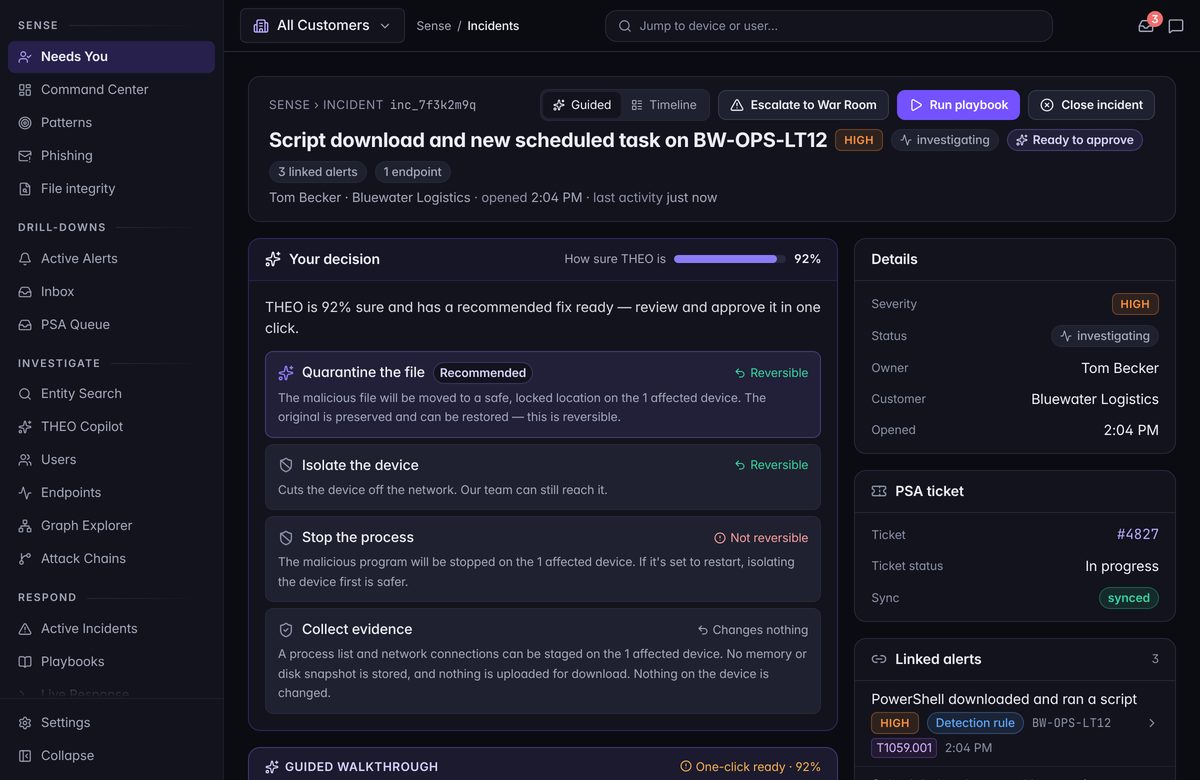
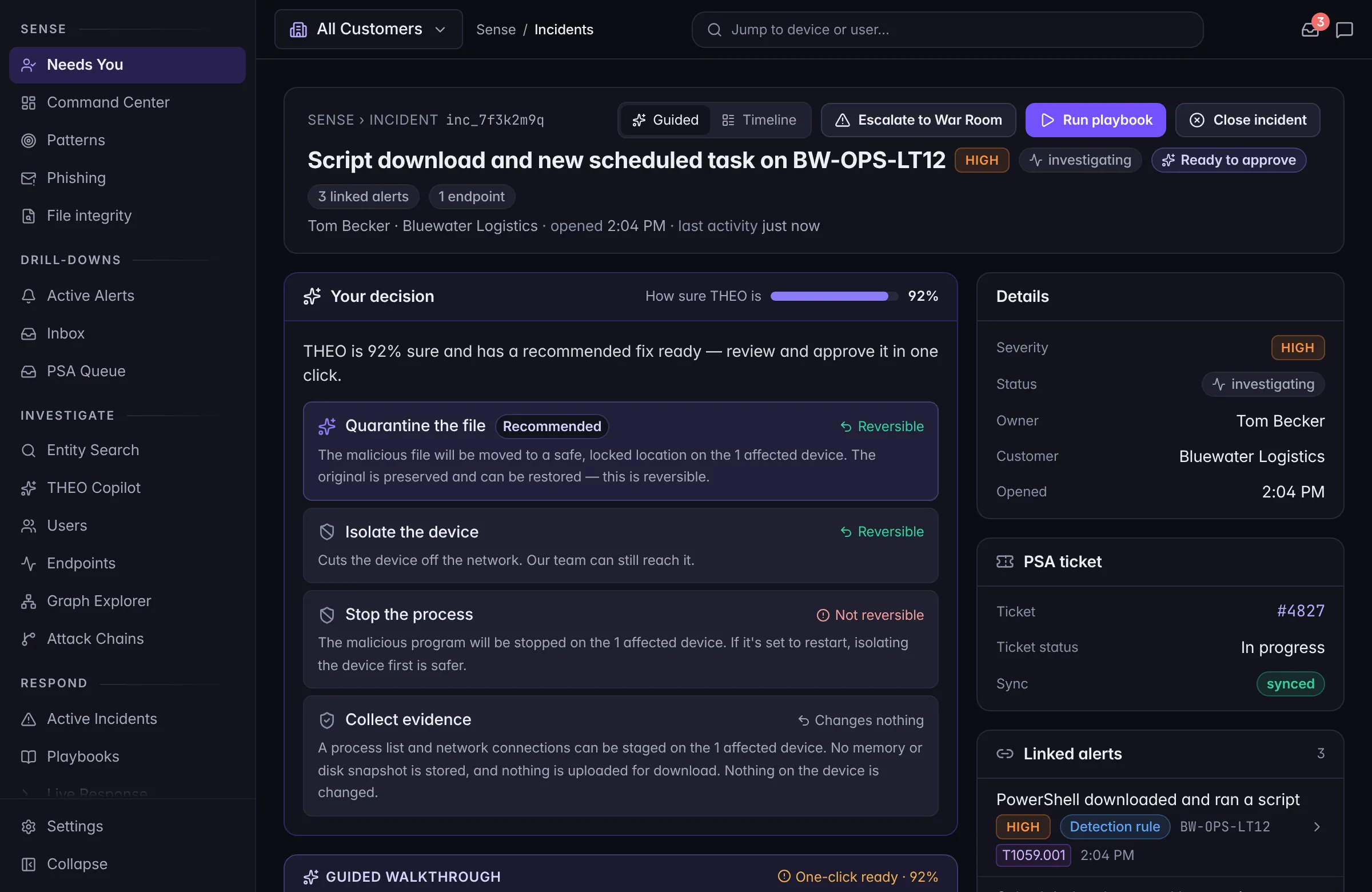
One incident
The choices are laid out. A person makes one.
By the time someone on our team opens an incident, THEO has linked the alerts behind it and lined up what could be done about it.
Each choice says what it would do and whether it can be undone. THEO recommends one. Nothing happens until a person approves it.
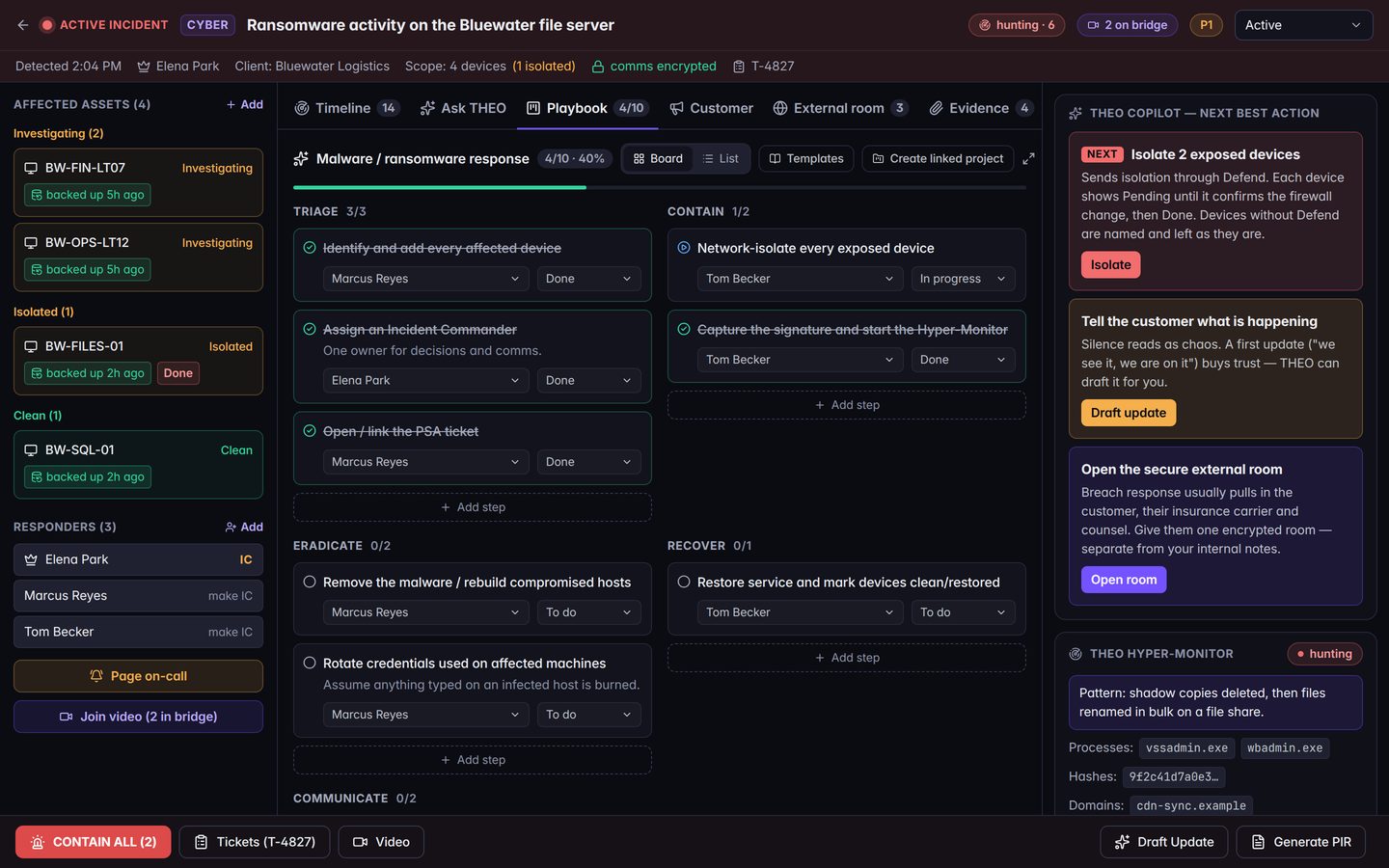
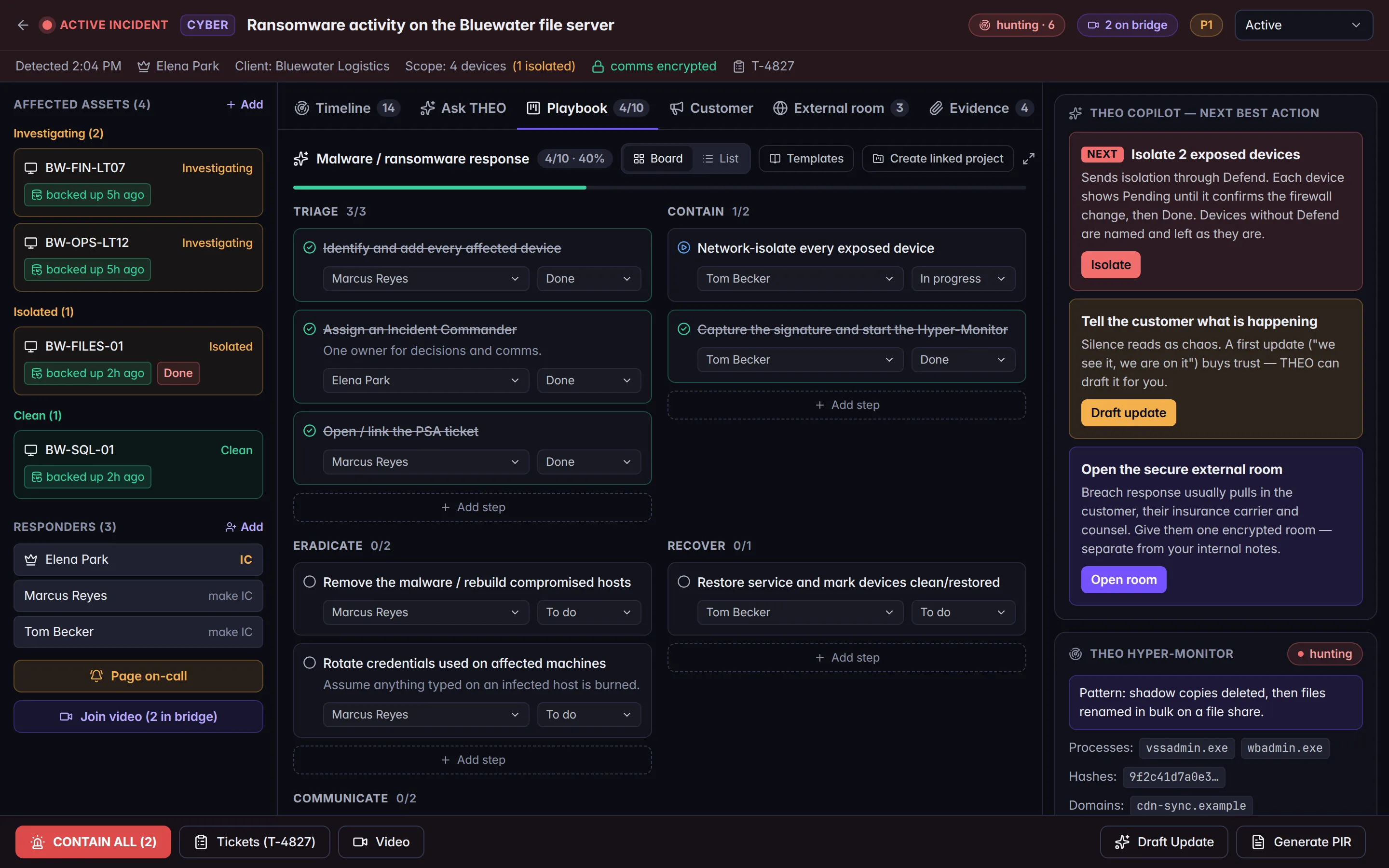
The incident room
One room for everything that follows.
A serious incident gets a room: the devices involved, who is working on it, and a playbook with an owner for every step.
THEO suggests what to do next and can draft the update that goes to you. Containing the affected devices is a button, and a person presses it.
Straight answers
Three things, said plainly.
- No response time is printed here. The response commitments in your agreement are the ones that apply, and we’d rather you held us to those than to a slogan.
- Containment is a decision, not a reflex. Software doesn’t get to shut your business down on a guess. A person on our team approves it.
- You get the whole story. What happened, what we did, and what we changed so it doesn’t happen again.
Before the bad day
The plan gets made while things are calm.
- Who to call, and who on your side can approve a shutdown or a password reset.
- Backups that can be restored. See backup and recovery.
- A signed incident response plan, and a practice run of it. See Cyber Readiness.
- A record of what changed, so the next morning isn’t guesswork.
- People who know what a bad email looks like. See awareness training.
Talk to a person
Not an emergency? Still worth a call.
If you’d like a plan in place before you need one, book a time and we’ll talk through what yours should cover.